Autism Spectrum Disorder (ASD) for Parents
What Is Autism?
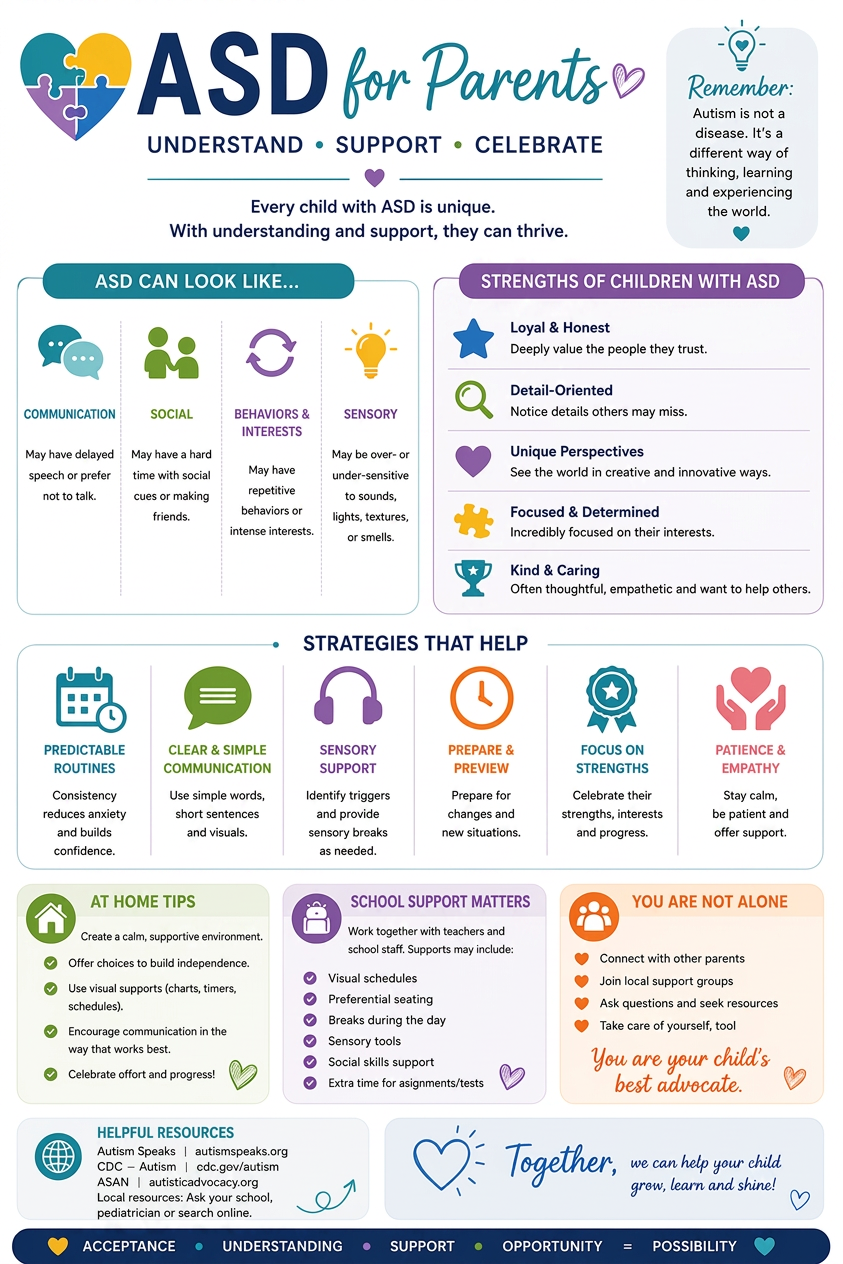
Autism Spectrum Disorder (ASD) is a neurodevelopmental difference that affects how a person communicates, interacts with others, processes information, and experiences the world around them.
Autism is not an illness and does not need to be “fixed.” Autism is a different way of thinking, learning, communicating, and experiencing the environment.
Autism Can Look Like…
Communication Differences
💬 Difficulty starting or maintaining conversations
💬 Prefers specific topics of interest
💬 May interpret language literally
💬 Difficulty understanding social cues
💬 Uses alternative ways to communicate needs
Social Differences
🤝 Prefers independent play or activities
🤝 Difficulty making or maintaining friendships
🤝 May struggle understanding others’ perspectives
🤝 Finds social situations overwhelming
Sensory Differences
🔊 Sensitive to sounds, lights, smells, textures, or crowds
🎧 May seek sensory input through movement or touch
🧦 Strong preferences for certain clothing or foods
Repetitive Behaviors & Interests
🔄 Prefers routines and predictability
🔄 Strong interests in specific topics
🔄 Repetitive movements (stimming)
🔄 Difficulty with unexpected changes
Strengths Often Seen in Individuals with Autism
🌟 Honest and genuine
🌟 Strong attention to detail
🌟 Excellent memory
🌟 Creative thinking
🌟 Deep knowledge of preferred interests
🌟 Strong pattern recognition
🌟 Loyal and dependable
🌟 Unique problem-solving abilities
Supporting Your Child at Home
Create Predictable Routines
📅 Use schedules and visual supports.
📅 Prepare for changes in advance.
Support Communication
🗣️ Give extra processing time.
🗣️ Use clear and direct language.
🗣️ Encourage communication in all forms.
Respect Sensory Needs
🎧 Identify sensory triggers.
🎧 Create calming spaces when needed.
🎧 Allow appropriate sensory tools and supports.
Build on Strengths
⭐ Incorporate interests into learning.
⭐ Celebrate successes and progress.
⭐ Focus on abilities, not just challenges.
School Supports That May Help
✔ Visual schedules
✔ Structured routines
✔ Social skills instruction
✔ Sensory accommodations
✔ Preferential seating
✔ Extended processing time
✔ Clear and explicit directions
✔ Breaks during challenging tasks
Autism and Emotional Regulation
Many autistic children experience:
😟 Anxiety
😟 Frustration when routines change
😟 Difficulty expressing emotions
😟 Feeling overwhelmed by sensory input
Teaching coping skills and providing supportive environments can help children develop self-regulation skills over time.
How Parents Can Help
❤️ Accept and celebrate your child’s differences.
❤️ Focus on strengths and interests.
❤️ Advocate for appropriate supports.
❤️ Collaborate with teachers and providers.
❤️ Remember that progress may look different for every child.
Myths About Autism
❌ Autism is caused by poor parenting.
❌ All autistic individuals are the same.
❌ Autism only affects communication.
❌ Autistic individuals do not want friends.
Facts
✅ Autism presents differently in every individual.
✅ Autistic individuals have unique strengths and challenges.
✅ Many autistic individuals desire meaningful relationships and connections.
✅ With understanding and support, autistic individuals can thrive.
How Brighty Brains Can Help
✨ Academic Tutoring
✨ Executive Functioning Support
✨ Social-Emotional Skill Building
✨ Homework & Study Skills
✨ Individualized Learning Strategies
✨ Strength-Based Support for Neurodivergent Learners
Remember
💙 Autism is not a limitation—it’s a different way of experiencing the world.
💙 Every autistic child has unique strengths, talents, and potential.
💙 The goal is not to change who they are, but to help them build the skills and confidence needed to succeed. 🌟
 Brighty Brains Tutoring